 Sudden Valley Siding
 Windows Built for Yew Street's Weather, Not Just Any Weather
Yew Street homes take a different kind of beating than a house on the dry side of the state. Between the marine air moving through Whatcom County, the driving rain that comes in sideways off a winter storm, and a moss season that seems to stretch longer every year, windows here are working harder than most manufacturers' warranties assume. A window that's rated fine for a showroom in a dry climate can still fail early once it's dealing with weeks of saturated air and constant wetting and drying cycles.
We replace windows on homes in this area regularly, which means we're not guessing at how a frame, a sill, or a piece of flashing tape is going to hold up five winters from now — we're watching it happen on houses a few streets over. That local pattern recognition is the difference between a window replacement that looks good at installation and one that actually performs for the next fifteen to twenty years.
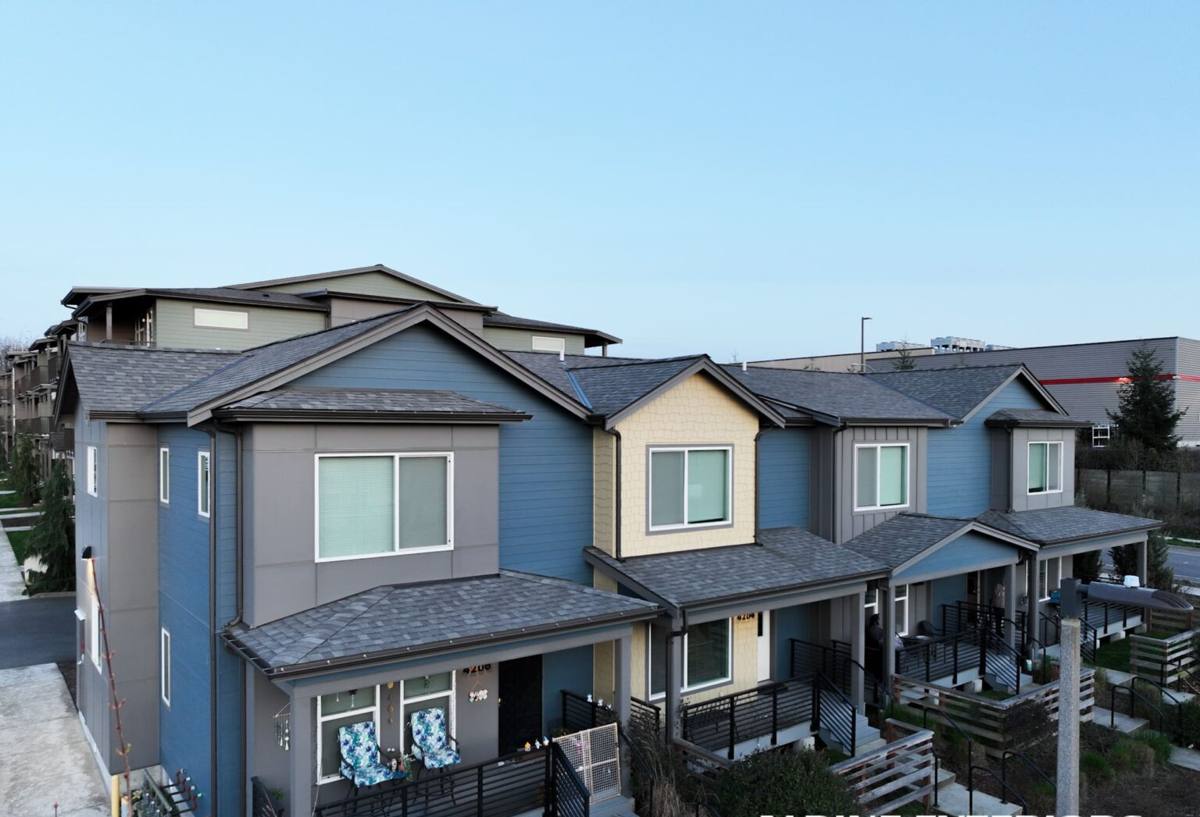
What Whatcom County Weather Actually Does to Old Windows
Driving Rain and Frame Rot
Wind-driven rain doesn't just hit a window straight on — it gets pushed up and under trim, into nail fin gaps, and behind old caulk joints that have shrunk and cracked. Once water gets behind the window frame instead of running off it, it has nowhere to go. On older homes without proper flashing, that trapped moisture rots the framing around the window opening long before anyone notices a problem from inside the house.
Moss and Trapped Moisture
A long moss season means more than green streaks on the roof. Moss and organic buildup on sills, tracks, and exterior trim hold moisture against wood and vinyl surfaces far longer than a quick rain shower would on its own. That constant dampness is what accelerates wood rot, degrades seals, and gives mildew a place to take hold around the window perimeter.
Marine Air and Hardware Corrosion
The salt-tinged, moisture-heavy air common to this part of Whatcom County is harder on metal hardware than most homeowners expect. Latches, cranks, balance systems, and screws corrode faster here than they would inland. Once hardware seizes or corrodes, a window that used to open and close smoothly starts sticking, and homeowners often blame the window itself when the real issue is the hardware never being rated for the environment it's in.
Signs Your Yew Street Home Might Need New Windows
Most window problems don't show up as a dramatic failure — they show up gradually, and it's easy to get used to a small annoyance until it's a bigger repair. Here's what we'd want you to look for:
- Fogging or condensation between the panes that won't wipe away — a sign the seal has failed and the insulating gas has escaped
- Windows that are difficult to open, close, or lock, especially after damp weather
- Visible gaps, soft or discolored wood, or paint that's bubbling around the frame or sill
- A noticeable draft near the window even when it's fully closed and latched
- Rising heating bills without any other clear explanation
- Moss, black streaking, or a musty smell concentrated around one or more windows
- Exterior caulking that's cracked, missing, or pulling away from the siding
What a Correct Window Replacement Job Actually Involves
Full-Frame Replacement vs. Insert Replacement
An insert (or "pocket") replacement drops a new window into the existing frame, which is faster and less invasive — but it only makes sense if that existing frame and the wall behind it are still sound and dry. A full-frame replacement removes the old window down to the rough opening, which is more work but gives us the chance to actually inspect and, if needed, repair the framing underneath. In a climate that pushes moisture into wall cavities the way ours does, we don't recommend an insert replacement over a frame we haven't been able to inspect. Covering up a hidden moisture problem is worse than not touching it at all.
Flashing and Water Management
This is the part of a window installation nobody sees once the trim goes back on, and it's the part that determines whether the job lasts. Proper flashing directs any water that gets behind the siding or trim back out and away from the framing, rather than letting it pool at the sill. On a home exposed to driving rain, correctly lapped flashing tape and a properly sloped sill pan aren't optional extras — they're the actual difference between a window that stays dry inside the wall and one that quietly rots the framing over the next several years.
Insulation and Air Sealing
Gaps around a new window frame need to be sealed with a low-expansion foam or backer rod and sealant designed for that use — not packed tight with standard canned foam, which can bow the frame and cause the window to operate poorly. Done correctly, this step is what actually stops drafts and helps the new window perform close to its rated efficiency.
Choosing the Right Window Material for This Climate
There's no single "best" window material — the right choice depends on your home's exposure, your maintenance tolerance, and your budget. Here's how the common options compare for a home dealing with regular rain, humidity, and marine air:
| Frame Material | Moisture Resistance | Maintenance | Typical Lifespan |
|---|---|---|---|
| Vinyl | Very good — won't rot or corrode | Low — occasional cleaning | 20-30+ years |
| Fiberglass | Excellent — very stable in wet/dry cycles | Low | 30-40+ years |
| Wood-clad | Good on the exterior; interior wood needs protection | Higher — finish upkeep on interior wood | 20-30 years with upkeep |
| Aluminum | Poor to fair — prone to condensation and corrosion in marine air | Moderate | Varies widely; hardware often fails first |
For most Yew Street homes, we steer people toward vinyl or fiberglass frames precisely because of how this climate behaves. Bare or poorly clad aluminum tends to struggle here long-term — not because the metal itself is "bad," but because condensation and corrosion in humid marine air are a real maintenance burden most homeowners would rather avoid. Wood-clad windows can look excellent and perform well, but they come with a real ongoing commitment to keeping the exterior finish maintained.
Our Window Replacement Process
Every job runs the same way, whether it's one window or a whole house:
- On-site assessment: We look at each window individually — not just the glass, but the framing, sill, and siding condition around it — before recommending insert or full-frame replacement.
- Written estimate: You get a clear breakdown of materials, scope, and timeline before any work starts. No pressure to decide on the spot.
- Product selection: We walk through frame material, glass package, and hardware options based on your home's exposure and your priorities — efficiency, appearance, or budget.
- Installation: Careful removal, inspection of the opening, correct flashing and sealing, and precise fitting so the window operates smoothly from day one.
- Cleanup and walkthrough: We clear debris, clean the new windows, and walk the job with you so you can see and test every window before we consider it done.
Cost Factors for Window Replacement
Every home is different, so we don't quote a flat per-window price without seeing the job — but the main variables that move the number are consistent:
| Factor | How It Affects Cost |
|---|---|
| Insert vs. full-frame replacement | Full-frame costs more but is often necessary once there's hidden rot or moisture damage |
| Window size and type | Large picture windows or specialty shapes cost more than standard double-hung or slider sizes |
| Frame material | Vinyl is typically the most budget-friendly; fiberglass and wood-clad run higher |
| Glass package | Double-pane vs. triple-pane, and coatings for efficiency or sound, add to the cost |
| Number of windows | Whole-house projects usually bring a better per-window rate than single replacements |
| Access and site conditions | Second-story windows, tight landscaping, or difficult access can add labor time |
As a general rule, homeowners should expect costs to range from several hundred to a few thousand dollars per window installed, depending on the factors above. We'll give you real numbers for your specific home during the estimate — we'd rather walk your property and measure than guess over the phone.
Why Hire a Crew That Already Works in Yew Street
A window installer who's never worked in this specific pocket of Whatcom County is starting from scratch on every job — figuring out how the local weather patterns actually stress a window, what flashing details hold up here versus somewhere drier, and what building department or HOA expectations might apply to your property. A crew that already works in this area has already worked through those questions on homes like yours.
That local experience shows up in small decisions that matter: knowing to double-check flashing details because of how driving rain hits certain exposures here, choosing hardware finishes that hold up better against corrosion, and recognizing early signs of moisture damage before they turn into a bigger repair. If your property is part of a homeowners association, we can also work with whatever architectural or exterior guidelines apply — just let us know up front so we can plan the project around them.
Get a Straight Answer About Your Windows
If your windows are fogging, sticking, drafty, or just old enough that you're wondering whether it's time, we're happy to come take a look. We'll give you an honest assessment of what's actually going on — not just a sales pitch — and a clear, no-pressure estimate for what it would take to fix it right. Use the form below to request a free estimate for your Yew Street home.